Skip to content

FAQsWe're here to help

Water Systems

What is a gravity fed system?

If you live in an older property, there is a good chance you have a gravity fed system. Renowned for poor water pressure and flow.

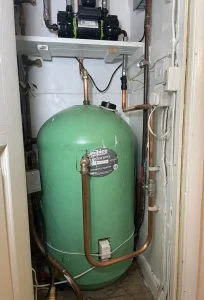
A gravity fed system consists of a large cold water storage tank usually located in the loft and a hot water cylinder located in an airing cupboard. These systems rely on gravity to force water around the system, with the height of the cold-water storage tank determining the pressure throughout the system.

Cold water is delivered to a cold-water storage tank from the water mains. Cold water from the cold-water storage tank is then supplied to the outlets around the system, such as taps, toilets, showers and baths. Once an outlet requiring hot water is opened, gravity will force cold water from the cold-water storage tank into the hot water cylinder, this will then force hot water out from the top of the cylinder, delivering hot water to the open outlet.

Watch our video on gravity fed systems.

What hot water system do I have?

Typically if you have a cold water storage tank in the loft space and a hot water cylinder in an airing cupboard, you will have a conventional open vented Gravity fed system. The water is heated either directly by an immersion or indirectly by a boiler. Mains fed systems can include a combination boiler, typically a wall mounted unit where cold water is heated on demand. An unvented system is a pressurised cylinder (unvented) fed and pressurised by the incoming mains, the stored contents are heated (various methods) and hot water pushed out by the force of the incoming mains on demand.

How to increase pressure on a gravity fed system?

Gravity fed systems are still widely used in homes across the UK, they rely on gravity to push water around the system, which often isn’t forceful enough for powerful showers or flowing taps.

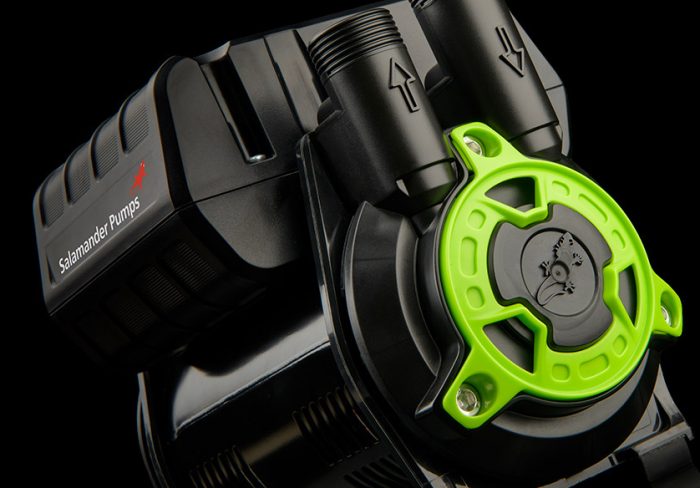
The pumps in Salamander Pumps’ CT Regen range will improve the pressure in these systems, whether you need to boost water pressure for a single shower or tap, multiple outlets in the bathroom, or throughout the entire house.

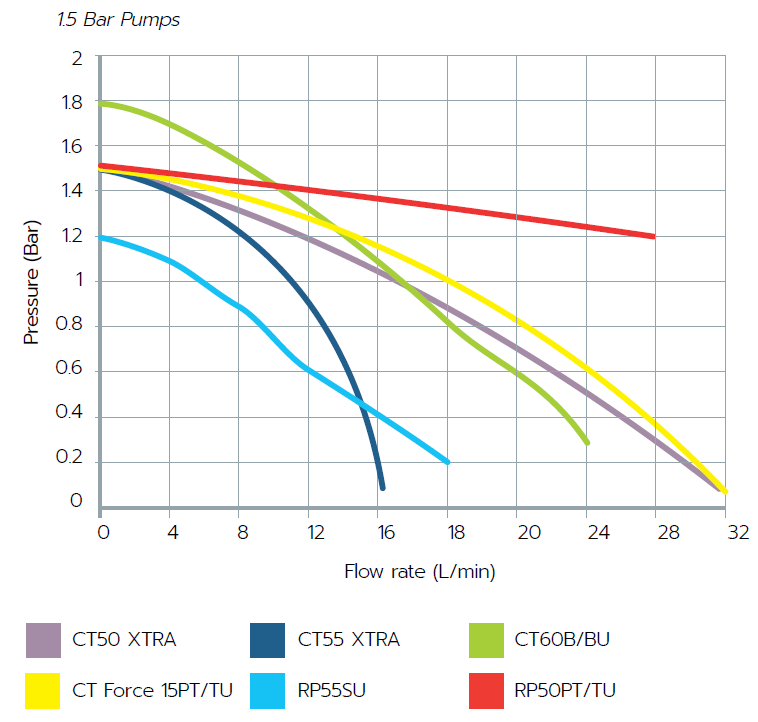
1.5 Bar Pumps

increase pressure on a gravity fed system - product overview - 1.5 bar pumps

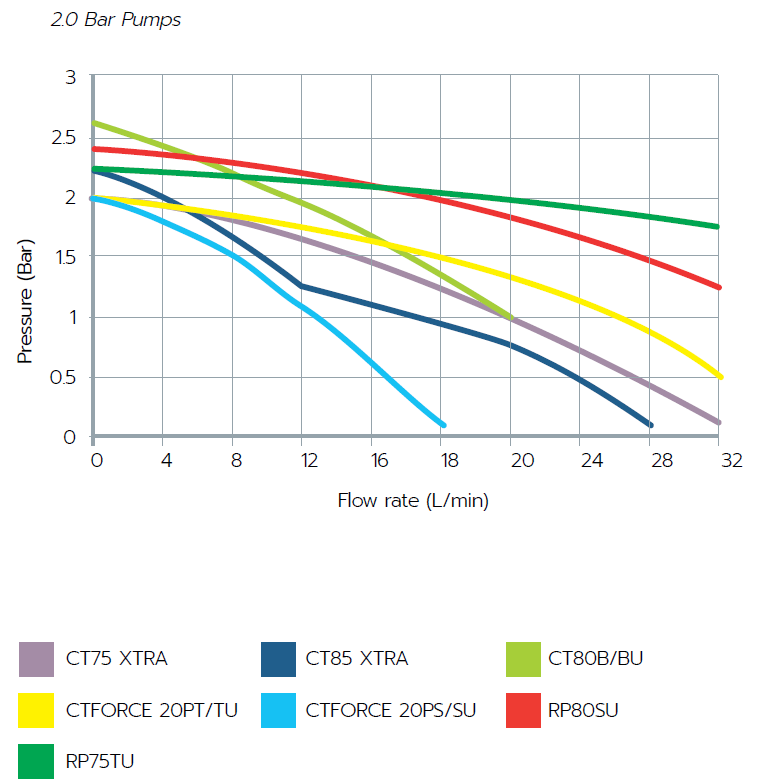
2.0 Bar Pumps

increase pressure on a gravity fed system - product overview - 2.0 bar pumps

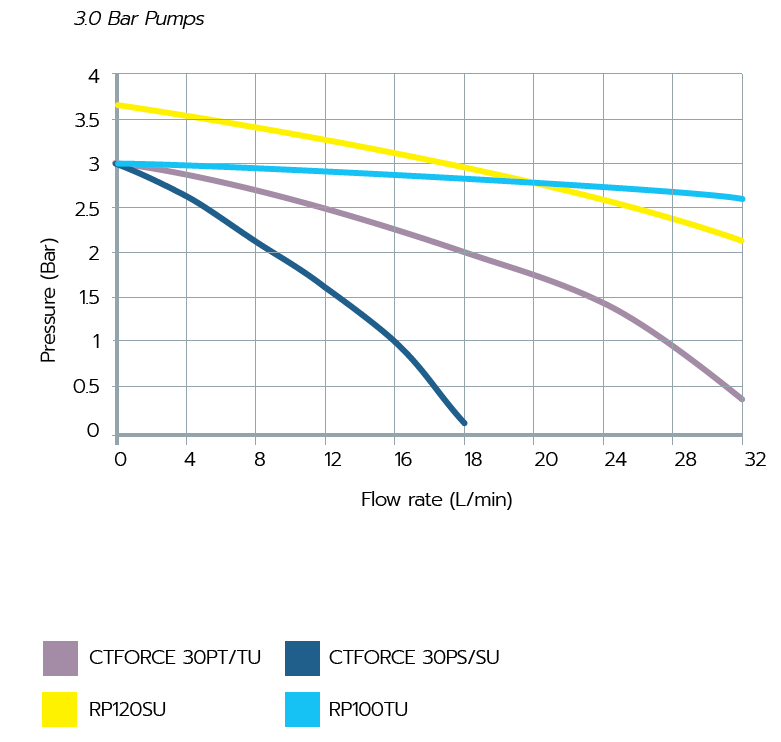
3.0 Bar Pumps

increase pressure on a gravity fed system - product overview - 3.0 bar pumps
Why is my hot water pressure low but cold is fine?

The water pressure can vary when the hot and cold water are supplied in different ways, such as when the hot water is supplied by a gravity fed system and the cold water is supplied directly from the mains. This can be seen when running a mixer tap and the pressure of the mains fed cold water is fine, but the gravity fed hot water pressure is poor.

It is possible to overcome this by using a universal, single ended pump to improve the gravity fed hot water pressure. If the hot water is supplied via a hot water cylinder, check for any blockages or restrictions in pipework that could be effecting the performance.

I don’t have enough cold water storage. How can I overcome this?

The cold water storage capacity must be adequate for all household requirements. A minimum of 50 gallons of useable cold water is required for a full bathroom and a minimum 30 gallons for a shower or ensuite. If you are unable to install a larger cold water storage tank, you can link multiple tanks in 28mm pipework to achieve the required capacity (linked tanks should be sat at the same level). Where it is not possible to add additional cold water tanks, a Water starvation Protection Kit (WSP) can be used. This unit will give automatic protection to the pumps by switching off the power to the pumps when the water in the supply tank falls below an acceptable level. (It is NOT a cure for insufficient cold water storage and 50% of the required water is required when using a WSP kit).

What is the difference between flow and pressure?

An easy way to understand the difference between flow is to remember pressure is the force exerted on water as it is pushed through your pipes to move it from one place to another, whilst flow is the volume of water passing through your pipes at any given time. Typically the larger the pipe is, the better the water will flow through it.

What is the difference between positive and negative head?

A gravity-fed system is either positive or negative head. In a positive head system a water flow rate of at least 2L/min exists from gravity alone. In negative head systems the water flow rate is less than 2L/min.

When choosing which pump you need it is important to know if the system is positive or negative head as incorrect selection can mean the pump won’t work.

A positive head pump will only work in a positive head system and a negative head (universal) pump will work in both a positive and negative head system, so if you are not sure choose a negative head pump.

How can I check whether my system is suitable for a positive head pump?

A positive head pump will activate when a minimum flow of water passes through the pump and out of the pumped outlet, such as a shower or tap, naturally (without assistance from the pump). The minimum flow rate required for our positive head pumps is 2 litres of water per minute (L/min).

You will need to measure the flow rate to determine if a positive head pump is suitable for your system. You will need to test all outlets, such as showers and taps, that are going to be pumped to determine if they have the required minimum flow rate of 2L/min. Watch our video to learn how to measure the water flow rate.

If you cannot measure the water flow rate, then you can check if the system is suitable for a positive head pump if there is more than 600 mm between the base of the cold-water storage tank and the highest point in the system after the pump.

If you are unable to achieve the minimum flow rate of 1 litre per 30 seconds from all outlets that are to be pumped you will need to install a negative (universal) head pump.

What is an AGL (anti-gravity loop) and when do I need one?

The AGL (anti-gravity loop) is a U-bend in the hot pipe supply created by dropping the pipe down 400mm before rising up again. The AGL prevents air in the system tracking up into the pump chamber and prevents back siphoning of water away from the pump which can cause aeration issues.

If the pump is above the dome of the hot water cylinder, we would advise using a side entry No-Stop Essex flange and AGL.

Gravity-Fed Shower Pumps

Pre-Installation

What is a shower pump?

A shower pump is a device that boosts water pressure in your pipes by increasing the volume of water which is pumped through them. The improved water pressure is visible at the showerhead where the force of the spray increases as the pressure and flow rate become stronger.

How does a shower pump work?

Shower pumps are designed to improve the water pressure in a gravity fed system by increasing the volume of water which is pumped through the pipes. We manufacture two types of pumps which work in slightly different ways.

Regenerative shower pumps, such as our CT Regen range, have a water wheel impeller inside the end of the pump. Water enters the shower pump through the inlet, the impeller spins the water around inside the impeller casing, building pressure as the water travels around the end of the pump. Between the inlet and the outlet of the shower pump there is a stripping block, this strips the water from the impeller and directs the water out of the top of the pump.

What is regenerative shower pump and how does it work?

Regenerative shower pumps, such as our CT range of pumps, have a water wheel impeller inside the end of the pump. Water enters the shower pump through the inlet, the impeller spins the water around inside the impeller casing, building pressure as the water travels around the end of the pump. Between the inlet and the outlet of the shower pump there is a stripping block, this strips the water from the impeller and directs the water out of the top of the pump.

What is the difference between positive head and universal (negative head) shower pumps?  

Shower pumps for a gravity fed system are either positive head or universal (negative head). When choosing the pump you need it is important to know if you need a positive head or universal (negative head) pump as incorrect selection can mean the pump won’t work.

A positive head pump is designed to assist and improve the natural flow of water. A flow switch set to activate positive head pumps when a flow rate of 2 litres per minute (L/min) passes naturally through the pump. Therefore, a minimum flow rate of 2L/min must be achieved naturally (without a pump) from all outlets in order to install a positive head pump.

A universal (negative head) pump works in a different way to a positive head pump. These pumps are capable of creating flow where there ordinarily isn’t a natural flow, such as loft conversion with outlets higher than the cold water tank or where ‘up and over’ pipework has been installed. Other considerations where a negative head pump may be needed include restrictive outlets such as a shower with body jets or an electric shower, or anywhere where mains fed cold water meets gravity fed hot water.

These pumps will pressurise the pipework between the pump and the outlet, which, when the tap or shower is turned on, releases pressure which a sensor in the pump sees and activates the pump. Once the outlet is turned off, the pump runs on for a short time and re-pressurises the pipework ready for the next time. A negative head pump usually has a pressure vessel, which acts as a buffer to stop false activation.

If you are unable to achieve the natural minimum flow rate from all outlets that are to be pumped for a positive head pump, you will need to install a universal (negative head) pump. A negative head pump activates when it detects a drop in pressure

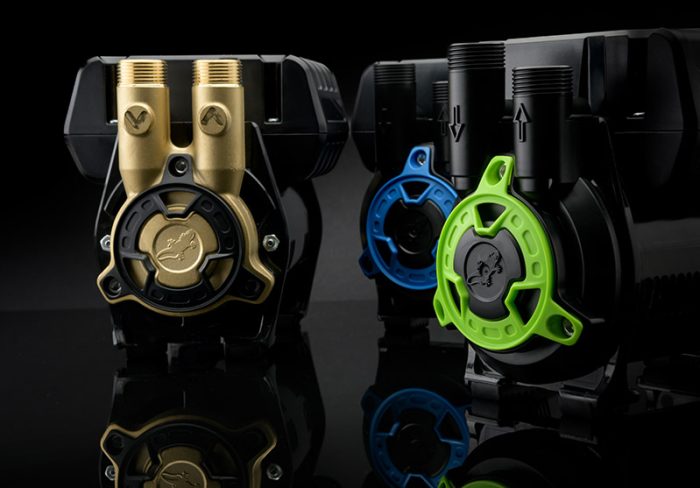
What is a single pump?

Single impeller pumps supply either hot or cold water, to single or multiple outlets. This can often be when the cold water is mains fed and the hot needs to be boosted to match this pressure.

What is a twin pump?

Twin pumps have two impellers and are designed to supply both hot and cold water to showers, bathrooms and whole house installations.

What does the flow rate of a pump mean? / What does L/min mean?

The flow rate of a pump basically tells us the flow of water it can move in a given time. This is shown as LPM or L/M which is basically the litres of liquid moved in one minute.

What does the pressure rating of a pump mean?

All of the pumps available at Salamander Pumps are rated in ‘bar’, which is the measure of pressure – 1 bar pressure being equal to 10 metres static head of water (the pressure exerted by 10 metres of water).

The higher the bar rating, the higher the pressure. The following is a general guide for applications:

1.5 bar pressure for one shower, tap or appliance
2.0 bar pressure for two or three showers, taps or appliances or a bathroom
3.0 bar pressure for the whole house.

Installation

If there is water in my pump, has it been used?

We regularly receive queries from customers who are concerned that their pump has already been used because they find water inside the pump while unboxing it. However, the quality testing carried out before our products leave the factory means that they may contain water upon purchase.

How to install the Salamander Pumps’ S-flange?
  1. Turn off the water supply to the hot water cylinder then open the hot water taps and empty the hot water cylinder.
  2. Unscrew and remove any existing compression fitting from the top of the hot water cylinder and clean the pipes. Clean the area to remove any debris or remnants from the previous connection.
  3. Use a pipe-cutter to trim the existing pipes to allow the flange to be fitted to the top of the hot water cylinder.
  4. Wrap PTFE or potable jointing compound around the cleaned male threads of the S Flange. It’s important to note that when wrapping PTFE tape around a thread each revolution or layer should overlap the last one by roughly a half to ensure a good seal. PTFE tape should always run in the same direction as the thread itself.
  5. Tighten the flange onto the hot water tank to ensure a watertight seal and carefully screw it into the hot water cylinder ensuring it is level.

Watch the video with the S-flange step-by-step installation.

Do Salamander Pumps come with a 3-pin plug?

All Salamander shower pumps are supplied with a fused 3 pin plug. Pumps can be hard wired into a fused spur without invalidating the warranty.

TankBoost does not come with a 3 pin plug.

Post-Installation

What checks should I carry out after installing a shower pump?

To successfully activate the pump on first operation: Connect the pump to the pipework, turn on incoming water supply and ensure that all isolating valves are open. Open an outlet and check for natural flow. Ensure all air is purged from the system and inspect connections and connecting pipework for leaks. Plug in electrical supply to pump and turn on. The flow will now increase as the pump activates. Close the outlet fully and the pump will stop.